
A Callback Starts in the Previous Conversation
A customer calls back and expects the team to continue naturally: “I spoke to someone yesterday about the quote.” The useful response is not to search every channel or ask the customer to repeat the story. It is to resume from the work state that already exists.
That state should be connected to the right Contact and to the previous call. It should make the customer’s history readable enough for the next responsible person to understand what was promised, what still blocks progress and what must happen next.
The Context the Team Needs Before Answering
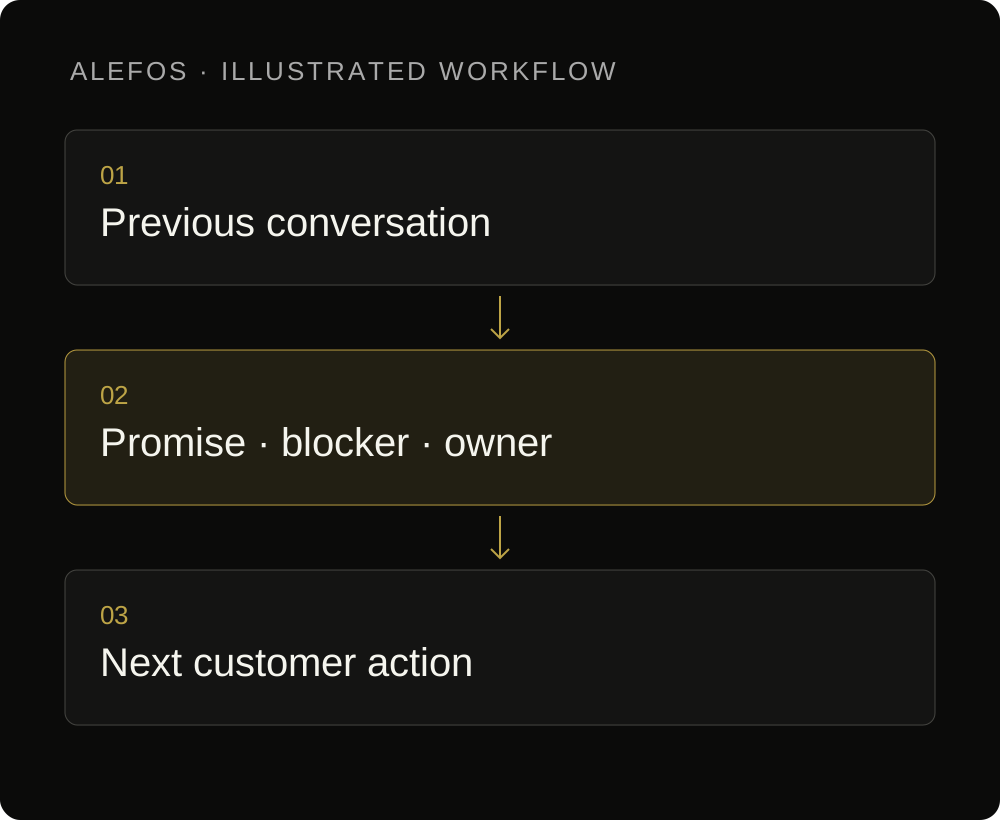
A short note can help, but it often leaves out the details that decide whether the customer receives a useful answer. Before continuing the conversation, the team needs a current, practical briefing.
- What was promised: the follow-up, deadline, quote, document or information the customer expects.
- What remains open: the objection, missing detail, approval or blocker that has not been resolved.
- What the customer is waiting for: the exact document, quote, answer or update that should be available next.
- Who owns the relationship now: the person responsible for continuing the work or confirming a handoff.
- What the next action is: the Mission or follow-up that turns the conversation into visible work.
Scroll the table to read every column. With a keyboard, use the left and right arrow keys.
| Signal to preserve | Why it matters on the callback |
|---|---|
| Previous promise | It lets the team answer from the commitment already made instead of starting over. |
| Open blocker or objection | It prevents a confident answer that ignores the reason the work stopped. |
| Expected information | It shows whether the customer is waiting for a quote, document, answer or update. |
| Owner and next action | It makes the handoff and follow-up explicit after the call ends. |
Why a Note or a Task Alone Can Still Fail
A note may say “send quote” and a task may say “call back.” Neither necessarily explains which offer was discussed, what the customer objected to, whether a document was promised or who last owned the conversation. The action exists, but the reason for it is still scattered.
That is why operational continuity needs more than an isolated reminder. Calls, messages and meetings create context. Contacts keep that context attached to the customer. Missions keep the next action visible. The next person needs all three to continue the relationship without losing the thread.
The team should not need the customer to reconstruct the context that the team already created.
AlefOS operational continuity principle
From Conversation to Decision to Mission
The practical flow is simple: a conversation creates context; the context makes a decision possible; the decision becomes a Mission or next action; and the responsible person reviews and completes it. A callback is where that chain becomes visible to the customer.
previous conversation -> customer context -> decision -> Mission -> human review -> next actionAlefOS is designed to keep those pieces connected across the work that is publicly documented today: Contacts, calls and Missions. The goal is not to replace the conversation. It is to preserve enough of its operational meaning for the relationship to continue.